
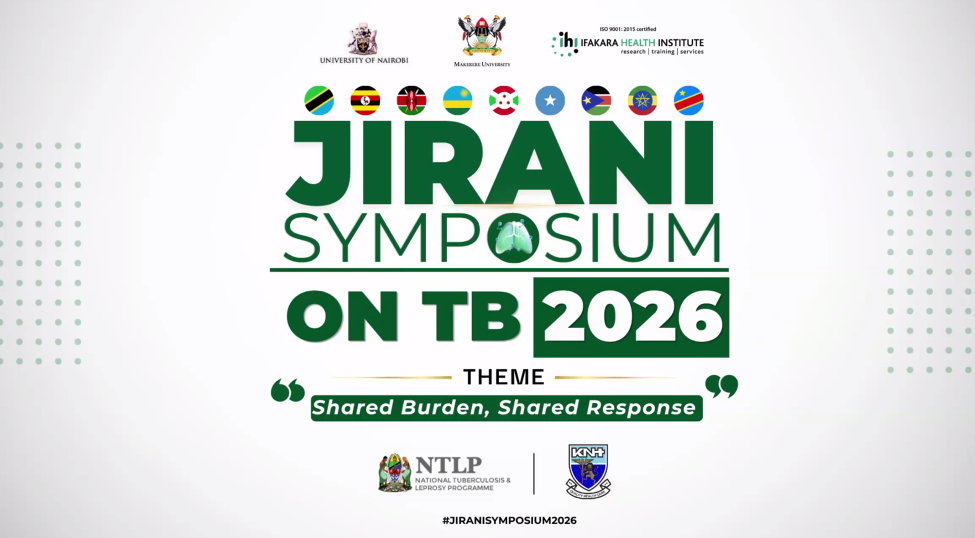
Stakeholders in the health sector and academia recently convened for the inaugural Jirani symposium on Tuberculosis (TB) which focused on combating TB, highlighting East African nations commitment to the global goal of ending the epidemic by 2030.
The gathering which was facilitated through a collaboration by the University of Nairobi (UoN), Makerere University College of Health Sciences and Ifkara Health Institute from the 23rd to 24th June 2026, emphasized the need for strengthened regional collaborations and innovative approaches to tackle TB, recognizing it as a complex issue with significant socio-economic dimensions.
In his address at the symposium Prof. Julius Oyugi, representing the dean of UoN’s Faculty of Health Sciences, made a call to action for the East African Community (EAC) member states to foster collaboration so as to eradicate TB and better their health systems.
“This gathering comes at a critical moment in our collective fight against TB. This symposium is more than an academic symposium, it is our joint call to action to strengthen our regional collaborations and charter to innovations that cater to TB in the region and to invest in research to ensure our young professionals and our communities are equipped and are engaged to eradicate TB as TB is not only a microbiological problem but also a socio economic problem,” he said in his address.
The symposium under the theme “Shared burden, shared response,” highlighted significant progress and ongoing challenges in the fight against the disease, particularly in East Africa.
Presentations by seasoned scholars, researchers, health practitioners and TB champions underscored the major strides made by these countries in eradicating and treating the disease which is a health crisis.
They highlighted Kenya's steps toward a free TB country through its "End TB Strategy" which aims for a world free of TB by significantly reducing incidence and deaths.
Kenya has made notable progress, with a 45% reduction in TB incidence and a 58% decline in TB-related deaths since 2015. However, challenges remain, particularly in pediatric case finding and diagnosing extrapulmonary TB (EPTB), which often affects individuals with HIV.
Future priorities for Kenya include further investment in TB and lung health, digitization of services using AI, and strengthening multisectoral engagement for effective TB control
The symposium also revealed that Tanzania is on track as well to meet its End TB strategy milestones, with substantial drops in incidence and mortality rates, of 50% and 75% respectfully since 2015. These were driven by addressing key factors like HIV, alcohol use, and undernutrition. However, challenges such as low detection of drug-resistant TB (DR-TB) and underutilization of diagnostic tools are key barriers to eradicating TB.
Uganda has also seen improvements, with a notable reduction in TB-related deaths and increased case notifications. The country recorded 56% reduction in TB related deaths from 2015 -2024.
Innovations like mobile clinics and a shift towards shorter, patient-friendly treatment regimens contributed to this success.
The country is leveraging technology, including AI and big data, to further reduce TB incidence. Despite these advancements, issues like delayed diagnosis in children proved to be a challenge.
Speaking at the symposium, Dr. Wobudeya Eric a Senior consultant Paedetrician and the Head of TB Paediatic unit at Mulango Hospital called for a shift in service delivery to avoid fpaediatric TB patients being overlooked.
“Children with TB are not just small adults they’re moving targets,” he said.
Implementation science is emerging as a key strategy to bridge the gap between theoretical plans to TB treatment and eradication and taking action. Discussions from the session underscored the need to strengthen efforts to improve diagnostic speed, accuracy, and patient follow-up.
The experts also championed for a multisectoral approach, community engagement, and innovative diagnostic and treatment strategies as essential to ultimately eradicate TB.
The symposium also featured insights from Somalia's National TB Program Manager Dr. Mohamed Jafar, detailing successes in reducing TB incidence by 45% and improving treatment outcomes despite operating in a challenging environment marked by nomadic populations and humanitarian crises.
Presentations also covered other aspects of TB management, including drug-induced liver injury (DILI) in TB patients and the genetic diversity of drug-resistant TB strains in western Kenya.
The symposium drove a simple message that the future of TB eradication would be driven by the African continent and that it was up to us to take up the mantle.
“History in TB treatment will be written in the East African Community by African Scientists, in African institutions supported by local governments and global partners,” Dr. Honorati Masanja, the Chief Executive Director of Ifkara Health Institute concluded in his address at the symposium.
- Log in to post comments


